The dice notebook
The History of Shut the Box: From Pub Game to Online Play
Shut the Box is a traditional dice-and-tile game built around a simple question: which open numbers can you close with the total you just rolled? Physical sets have long been used as casual pub and tabletop games, while modern online versions make it easier to play alone, repeat a daily challenge or invite friends.
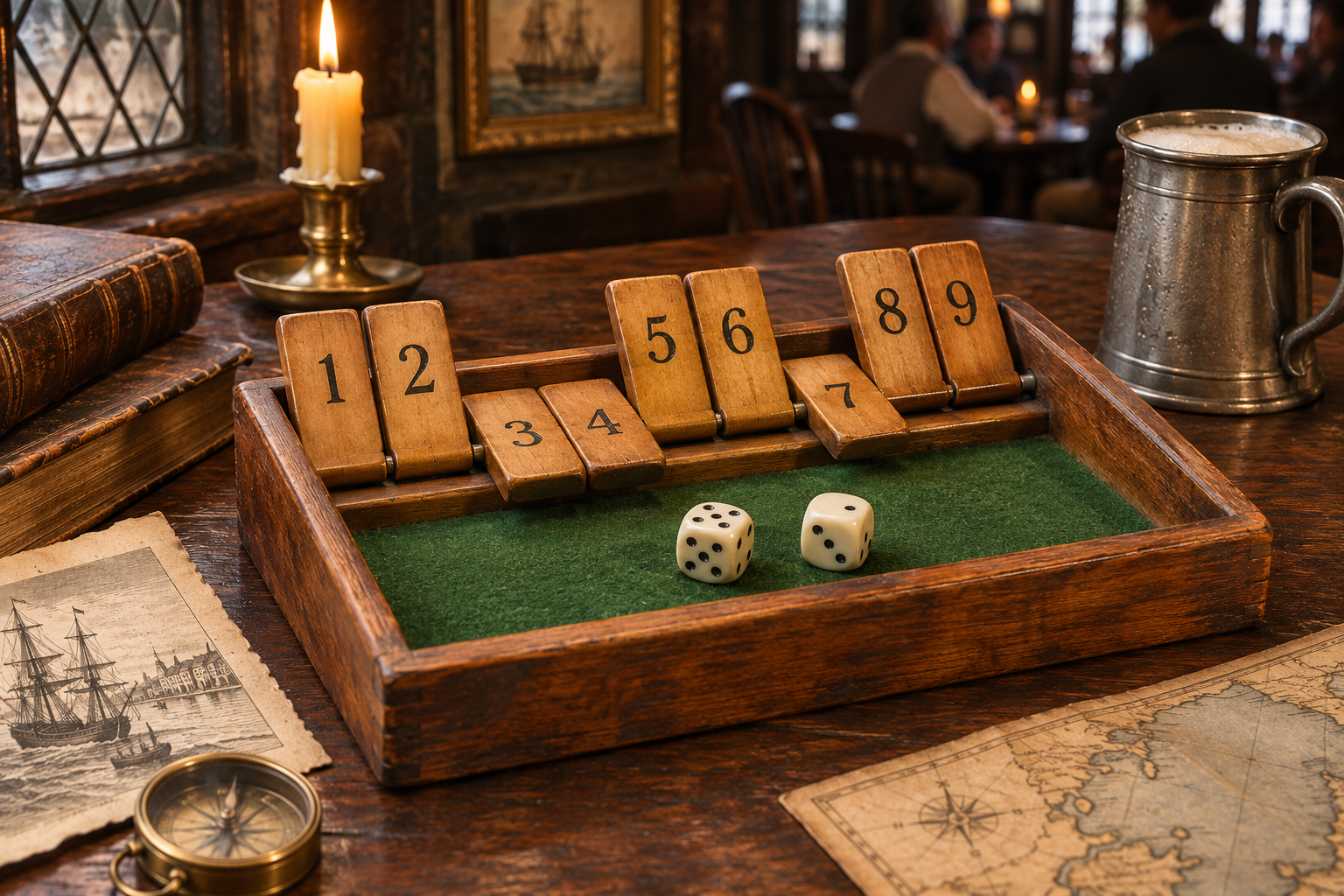
The exact rules are not universal. Sets can differ in tile count, dice choices and scoring, so check the rules of the version you are playing before comparing strategies.
The basic game idea
A player rolls one or two dice, adds the values and closes one or more open tiles whose numbers sum to that total. If no legal combination remains, the round ends. In the sum-scoring version used on this site, the open tile values become the score; lower is better, and closing every tile produces zero.
For the complete current rules, see the Shut the Box rules page. The online game uses the same implemented rules for its playable board.
Why physical sets vary
Traditional sets commonly use numbered tiles, but a nine-tile board and a twelve-tile board leave different totals and different late-game choices. Some variants let a player choose one or two dice throughout; others switch to one die when only lower tiles remain. Scoring can also count open values, count open tiles or read remaining digits as a number.
These are rule variants, not mistakes. Before a group starts, agree on the board, dice rule, legal combinations, scoring and tie handling. A strategy from one set may not transfer to another.
What changes online
An online version can make legal combinations visible and keep scores consistent. It can also offer a daily dice sequence, practice rounds or friend rooms. Those features are product choices rather than universal parts of Shut the Box.
Use the online board when you want a clear replayable position. Use a physical set when the group values the tactile ritual of lifting tiles and rolling dice on the same table. The underlying decision remains the same: compare the boards left by each legal move.
Keep the history separate from strategy claims
A familiar game can have a long cultural life without every story about its origin being verified. This guide focuses on the rules and variations a player can check. It does not claim a single inventor, a universal pub tradition or an optimal whole-game strategy.
For current play, read the strategy guide, then compare a move with the actual board in front of you. History explains why several versions may exist; the rules determine whether a move is legal now.
Rules scope: The Little Dice Club rules. Sources and calculation methods. Probability examples are not overall game win rates.