The dice notebook
Shut the Box Probability: How to Read the Odds
Shut the Box probability is useful when it explains a decision, not when it gives one magic number for every board. The odds change with the tiles still open, the dice rule, and the way a house counts legal combinations. Start by describing the exact position before comparing outcomes.
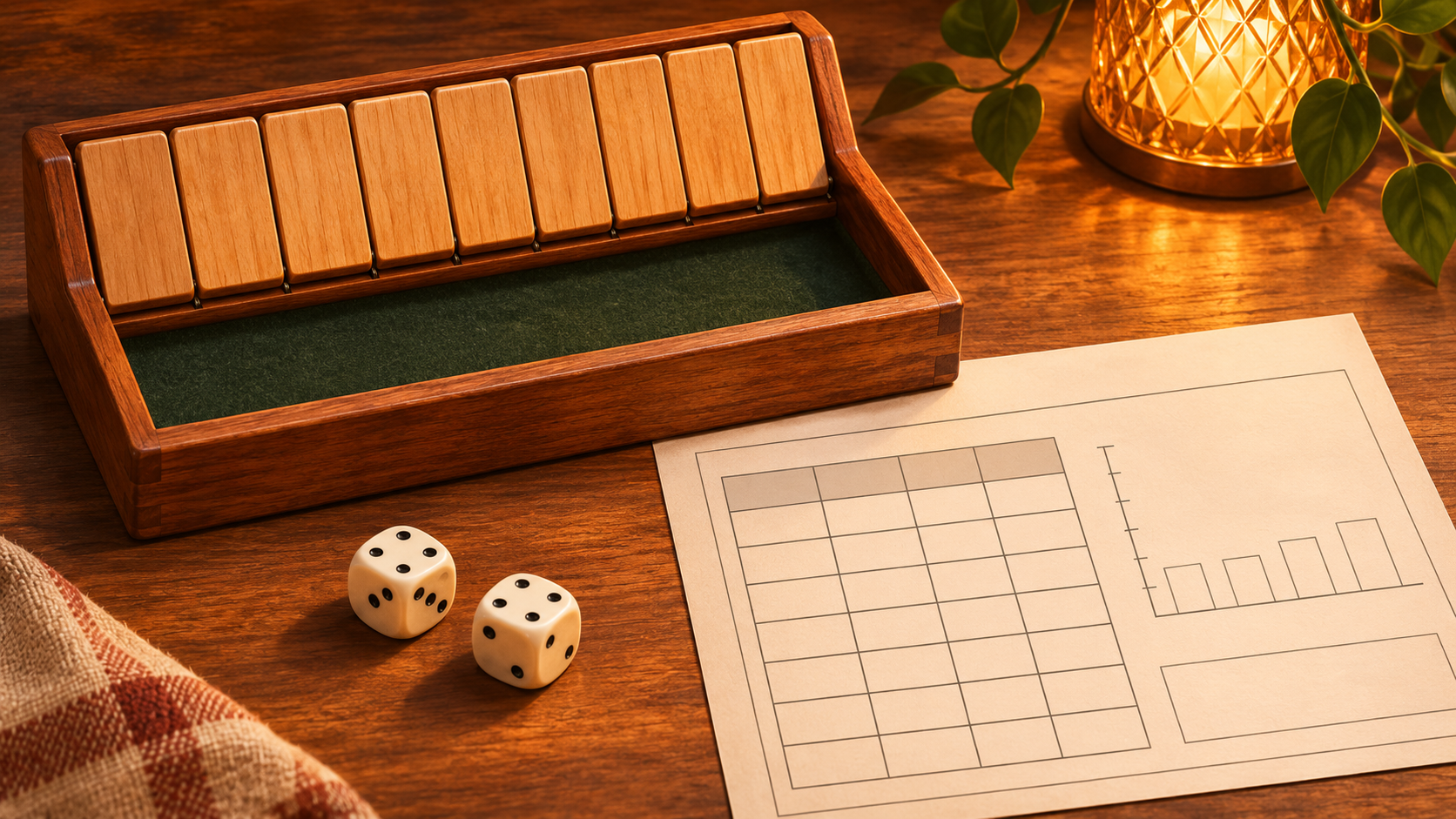
Define the position first
Write down every open tile, the number of dice, and the rule for choosing tiles. Many games use two dice early and change later, while some house rules keep two dice throughout. A probability statement without those details cannot be reproduced.
Also define the event: rolling a sum that can be covered, closing all remaining tiles, or finishing with the lowest score. These are different questions. A favorable roll is not the same as a winning round.
Count outcomes without hiding the assumptions
For two ordinary dice, list the equally likely ordered outcomes or the sums with their frequencies. Then mark which sums have at least one legal tile combination in the current position. If a sum can be covered in several ways, the roll probability is still about the roll; the choice between combinations is a second decision.
Do not add probabilities from overlapping choices as if they were separate events. One roll may satisfy several combinations at once. Make the outcome set explicit before doing arithmetic.
Compare choices after a roll
Suppose two legal combinations cover the same total. One may remove a high-value tile and leave flexible small tiles; another may reduce the number of options for later rolls. The immediate score or visual progress is only part of the comparison.
Record the position before and after each choice. The strategy guide can frame the decision, while the rules page defines the version you are playing. Do not transfer a table from one rule set to another without checking it.
Illustrated worksheet
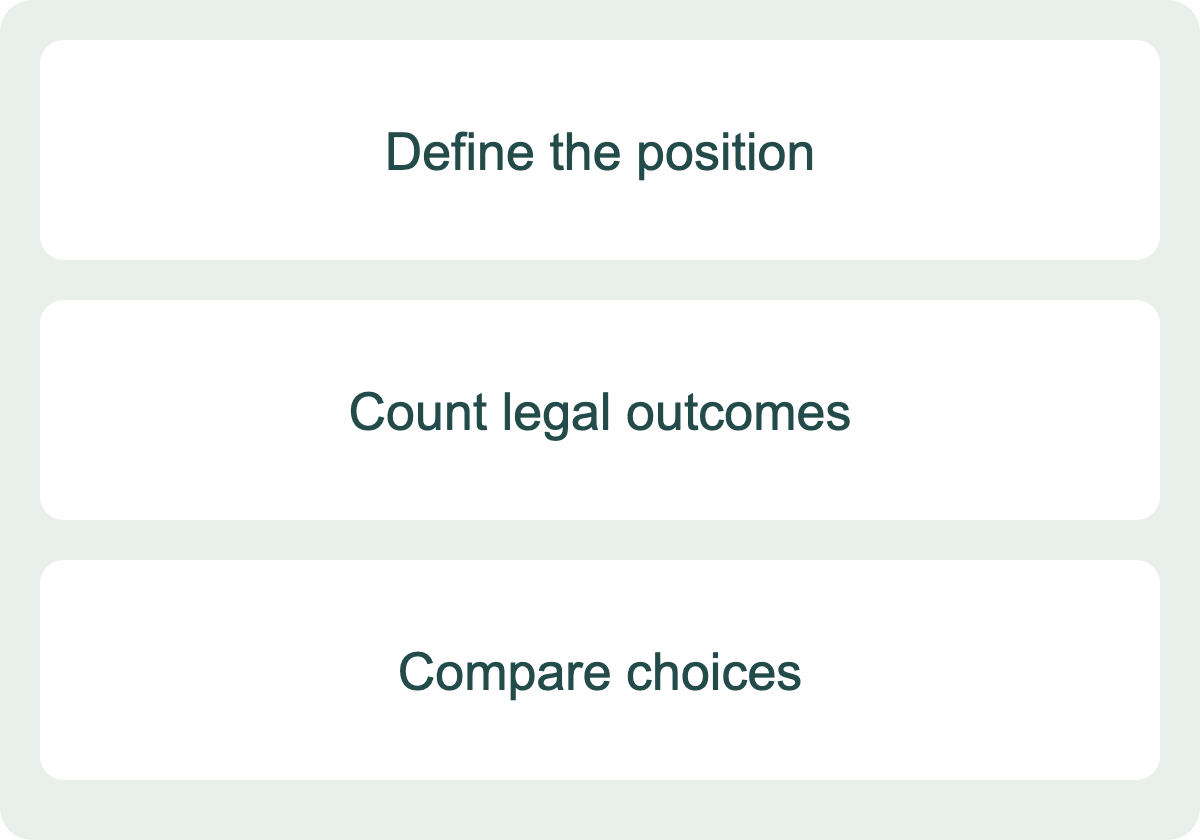
This diagram summarizes the example in this article.
Read a result as a comparison
A small simulation can compare policies: choose the largest tile, preserve combinations, or use a house rule. State the number of trials, starting position, dice rule, and policy. A simulation estimates the policy you wrote; it does not prove a universal best move.
For a family game, the useful output may be simpler: which choice leaves more legal combinations next turn? Explain that measure so another player can repeat it with paper and dice.
Keep probability practical
Use probability to ask better questions: Which tiles make this sum easier to cover? Does closing one tile remove too many future combinations? Does the house rule change the comparison? Then play several rounds and record what happened.
The best probability note names its assumptions, shows its outcomes, and connects the calculation to a real choice. That is more useful than quoting an isolated percentage without a board.
Explain uncertainty honestly
Two tables can disagree because they use different starting tiles, dice rules, or definitions of success. Put those assumptions above the result. If you simulate, publish the policy and the random process, then repeat with another seed or larger sample. Results that move substantially are a reason to investigate, not a reason to choose the most flattering percentage. For casual play, a transparent comparison is more helpful than false precision.
Rules scope: The Little Dice Club rules. Sources and calculation methods. Probability examples are not overall game win rates.